


Blog
Every Sunday Is Resurrection Day


Related Posts

The Crucifixion of Jesus

This post by Chris Anderson is an excerpt from Sundown to Sundown: Meditations on the Twenty-Four Hours Preceding Jesus’ Death (Day 22), released in 2025.“We love because he first loved us.” (1 John 4:19)Jesus suffered through the night. Suffered through...

O Wonderful Exchange
“For our sake he made him to be sin who knew no sin, so that in him we might become the righteousness of God.” (2 Corinthians 5:21)The doctrine of justification is glorious, but it can also feel abstract until we...

Jesus’ Love for His Own
This post by Chris Anderson is an excerpt from Sundown to Sundown: Meditations on the Twenty-Four Hours Preceding Jesus’ Death (Day 1), released in 2025.“Now before the Feast of the Passover, when Jesus knew that his hour had come to...

Don’t Leave Your Career—Leverage It!
This post by Chris Anderson is from a new publication called More Gospel Meditations for Missions. Coming soon!“They were tentmakers by trade.” (Acts 18:3)I used to think of “closed” or “restricted-access” countries primarily as Muslim strongholds. You’re not getting a...

Christlike Compassion
This post by Chris Anderson is from Gospel Meditations for Missions (Day 23).“When he saw the crowds, he had compassion for them.” (Matthew 9:36)Matthew 9:35–38 is a heart-stirring depiction of Christ’s compassion for the harassed and shepherdless multitudes. It appears at...

Why the Songs We Sing Deserve More Thought

It's been a couple of years since we released our church music book—Theology That Sticks, and we believe now is a great time to bring it back to the attention of Christians as an excellent worship resource for you, your...

Grace to You, Mom!
This post by Chris Anderson comes from Gospel Meditations for Mothers (Day 1).“Grace to you.... The grace of our Lord Jesus Christ be with you.” (1 Thessalonians 1:1; 5:28)It’s tough to be a mom, especially in the early years. I...

Jesus’ Journey to Golgotha
This post by Chris Anderson is from a NEW BOOK called Sundown to Sundown: Meditations on the Twenty-Four Hours Preceding Jesus’ Death (Day 21).“And as they led him away, they seized one Simon of Cyrene, who was coming in from...

My Jesus, Fair: A Song for the Easter Season
The cross work of our Lord Jesus Christ is our theme and anthem all year round. But as we approach the Easter season, it comes into particular and poignant focus. “My Jesus, Fair” is a Church Works Media hymn that...
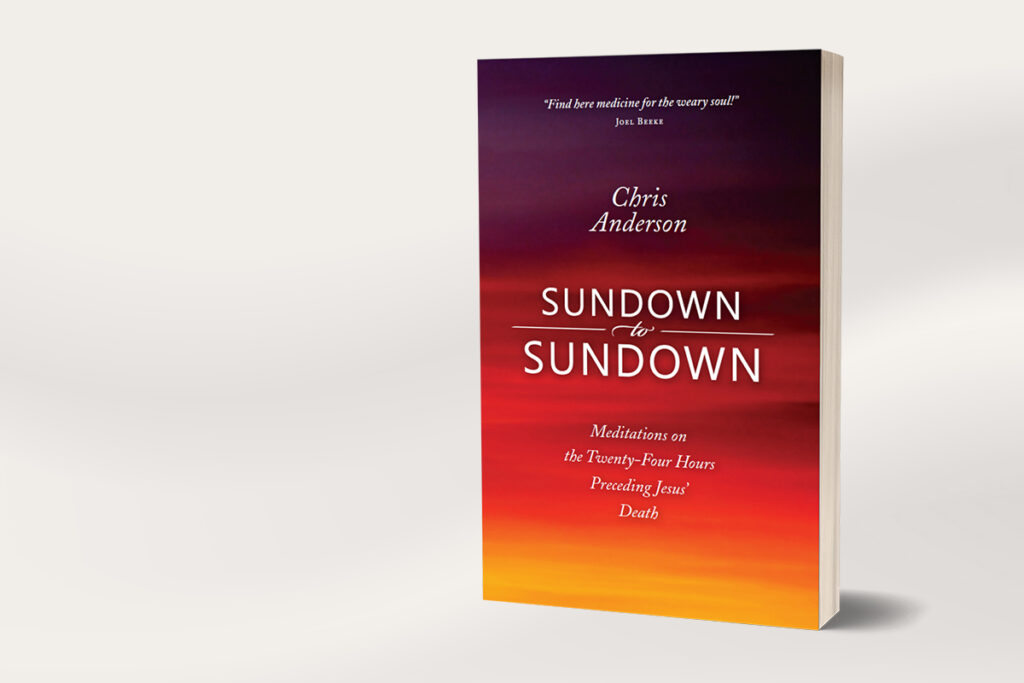
Introducing Sundown to Sundown
This excerpt is the introduction to Sundown to Sundown, a new book by Chris Anderson, available now!The most remarkable twenty-four hours in history began with a feast which marked the passing of the Old Covenant and the dawning of the...

Jesus’ Mercy: “Today You Will Be with Me in Paradise”
This post by Chris Anderson is from a NEW BOOK called Sundown to Sundown: Meditations on the Twenty-Four Hours Preceding Jesus’ Death (Day 24).“And when they came to the place that is called The Skull, there they crucified him, and...

Hold the Rope: Praying for Gospel Advance
This post by Chris Anderson is from Gospel Meditations for Prayer (Day 19: “Pray for Gospel Advance”).“Brothers, pray for us, that the word of the Lord may speed ahead and be honored.” (2 Thessalonians 3:1)Prayer was the very heartbeat of the...
